
Airbrush tip dry
Paint drying on the needle tip as you spray, so the pattern gets narrower, spits or stops. Normal with acrylics, and manageable.
Quick answer
Tip dry is paint drying on the needle tip and nozzle while you spray, which is common with fast-drying acrylics. Wipe the tip every few minutes with a swab dampened in cleaner, thin the paint with its own thinner, add a little of the maker's retarder or flow improver if they offer one, avoid overly high pressure and hot, dry air, and use clean trigger technique.
- TimeOngoing technique
- DifficultyBeginner
Safety first
- An exposed needle tip is sharp and bends easily: keep it away from eyes and handle carefully.
Is this your problem?
- Spray returns after wiping the tipTip dry: this page.
- No improvement after wipingDeeper clog: see Airbrush clogged.
- Spits from the startSee Airbrush spitting.
You'll see
A small crust of dried paint builds on the needle tip; the spray narrows, gets grainy, spits or stops after a few minutes and comes back after you wipe the tip.
Likely causes
- Fast-drying acrylicsWater and alcohol in acrylics evaporate fast at the tip where air rushes past.
- Warm, dry air or high pressureMore airflow and drier air speed up evaporation at the tip.
- Paint too thickMore solids per drop means faster build-up.
- Long pauses with the trigger held for airAir flowing over a wet tip dries the paint there.
What you need
- Cotton swabs or soft brush
- Airbrush cleaner
- Paint maker's thinner and retarder or flow improver
- Pipette for measuring
How to fix it
- Remove the needle cap (if your airbrush allows and you are comfortable with an exposed tip) so you can see and wipe the tip.
- Every few minutes, wipe the needle tip with a swab dampened in cleaner, wiping away from the point.
- Thin the paint with its own thinner to a milk-like consistency.
- Add the maker's retarder or flow improver in small amounts, as they instruct.
- Use the lowest pressure that atomises well; test on card.
- Trigger: air on before paint, paint off before air; avoid long air-only blasts between passes.
What to avoid
- Spraying through a crusted tip.
- Picking at the tip with a blade or fingernail.
- Bending the exposed needle tip when wiping.
Common wrong fixes
- Raising pressure: it dries paint at the tip faster.
- Thinning with water only for acrylics designed for their own thinner: can dry faster or bead.
Not worth fixing, or time to ask us
If tip dry happens within seconds even with fresh thinned paint, tell us the paint and thinner you use.
By situation or hobby
Water-based acrylics (Vallejo-type)
Most tip dry. Use their airbrush thinner and flow improver; do not mix in lacquer thinner.
Alcohol-based acrylics (Tamiya-type)
Some modellers thin with lacquer-type thinner or add retarder to reduce tip dry; check the maker's guidance.
Lacquers
Rarely tip dry; if they do, use a slower-drying (levelling) thinner.
Hot weather
Work in a cooler room, take breaks, wipe more often.
Already ruined?
If paint has crusted, stop, remove the needle cap and soak the tip area with cleaner on a brush, then wipe. If the spray is still poor, do a full clean.
Next time
- Wipe the tip regularly.
- Thin with the right thinner.
- Use retarder or flow improver.
- Lower pressure.
- Cooler, less dry room.
Frequently asked questions
What is airbrush tip dry?
Paint drying on the needle tip and nozzle while spraying, which narrows or blocks the spray.
How do I stop tip dry with acrylics?
Wipe the tip often, thin properly, use the maker's retarder or flow improver, and lower the pressure.
Does retarder help with tip dry?
Yes, a small amount of the paint maker's retarder slows drying at the tip. Too much can make paint tacky.
Should I spray without the needle cap?
Many modellers do so they can wipe the tip, but the needle is then easy to bend. It is a trade-off.
Jargon explained
- Retarder
- An additive that slows paint drying.
- Flow improver
- An additive that helps paint flow and can reduce tip dry.
Tools that can help
-
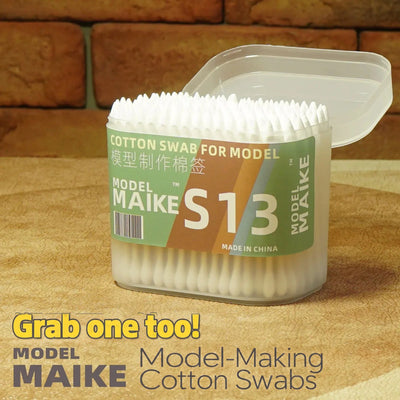
MAIKE 200pcs Double Round Tip Cotton Swabs from €15,95
Why it helps: Firm round-tip swabs that hold their shape.
How to use it
Dampen one in cleaner to wipe the needle tip during sessions.
-
20 pcs. Pipettes For Measuring Colors And Thinners €14,95
Why it helps: Pipettes for mixing paint and thinner in specific ratios.
How to use it
Measure thinner and retarder drops consistently.
-
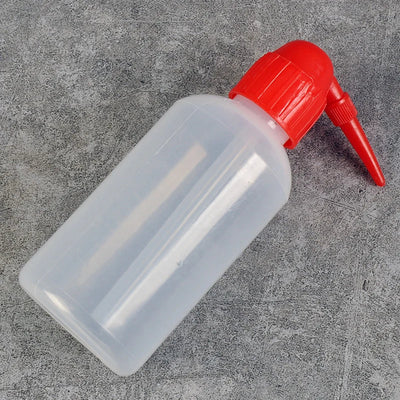
Airbrush Cleaning Bottle from €15,95
Why it helps: A squeeze bottle for cleaning between color changes.
How to use it
Keep cleaner at hand for tip wipes and flushes.

Reviewed November 3, 2026