
Airbrush spitting, splattering or sputtering
Blobs, specks or an uneven stream instead of a fine mist. Usually thick paint, dried paint on the tip, a loose or dirty nozzle, or water in the air line.
Quick answer
An airbrush spits when paint cannot atomise evenly: the paint is too thick for the pressure, dried paint has built up on the needle tip, the nozzle is dirty, loose or cracked, or water from the compressor is coming through the line. Wipe the needle tip, thin the paint slightly, check the nozzle is clean and snug, add or empty a moisture trap, and test on card while raising pressure in small steps.
- Time5-20 minutes
- DifficultyBeginner
Safety first
- Spray in a booth or with good ventilation and wear a respirator suited to paint mist and solvents.
- Release air pressure before taking the airbrush apart.
Is this your problem?
- Spits at the start of every strokePaint is pooling at the tip between strokes: check trigger technique and wipe the tip (tip dry).
- Clear water droplets or watery spots appearMoisture from the compressor: add or drain a moisture trap.
- Bubbles appear in the cup while sprayingAir is getting into the paint channel, usually a loose, dirty or cracked nozzle: see the steps below.
- Only air comes out, no paintA clog, not spitting: strip and clean the nozzle.
- The spray pattern is lopsided or spatters to one sidePossibly a bent needle tip or damaged nozzle.
- The finish is rough and pebbly, but the spray looks finePaint drying before it lands: see grainy or orange-peel finish.
You'll see
Paint lands as dots, blobs or a grainy speckle instead of a smooth mist. It may happen at the start of each stroke, randomly, or come with water droplets or bubbles in the cup.
Likely causes
- Paint too thick for the pressureThick paint breaks up into larger droplets that the air cannot atomise; they land as dots.
- Tip dry (paint dried on the needle tip)Fast-drying acrylics dry around the needle tip and nozzle opening, disturbing the airflow and flicking out flakes and blobs.
- Dirty, loose or cracked nozzleOld paint narrows the opening; a loose or cracked nozzle lets air into the paint passage, causing bubbles and pulses.
- Water in the air lineCompressors condense moisture from the air; droplets travel down the hose and burst out with the paint.
- Pressure too lowToo little air cannot break up the paint, especially with thicker or metallic paints.
- Trigger techniquePulling back for paint before air is flowing, or stopping air before paint, leaves paint at the tip that bursts out on the next stroke.
What you need
- Airbrush cleaner or the thinner that matches your paint
- Cleaning brushes and a cleaning pot or bottle
- Cotton swabs
- Test card
- Moisture trap
- Paint filter or strainer (for flaky paint)
How to fix it
- Stop and wipe the needle tip: remove the needle cap and gently wipe dried paint off the needle tip with a swab dampened in cleaner, pulling away from the point.
- Thin the paint a little: most hobby airbrush paint should flow like skimmed milk. Pre-thinned airbrush paints usually need no or very little thinning; follow the maker.
- Spray the cup empty, add cleaner and spray through until it runs clear.
- If spitting continues, strip the front end: remove the nozzle with the proper wrench, soak and brush it clean, and check it for cracks. Refit it snugly, but do not overtighten.
- Check the needle tip under a light or magnifier; if it is bent or hooked, straighten and hone it with a needle repair tool or replace the needle.
- Fit or drain a moisture trap between the hose and the compressor or airbrush.
- Test on card: start low and raise pressure in small steps until the mist is fine and even. Many modellers work around 15-25 psi for general coverage with acrylics and lower for fine lines, but check your paint maker's guidance.
- Use clean trigger technique: air on, then paint; paint off, then air off.
What to avoid
- Spraying through a half-blocked tip hoping it clears.
- Raising the pressure a lot in one go.
- Skipping the test spray on card.
- Overtightening the nozzle: it can crack.
Common wrong fixes
- Using lacquer thinner to clean out water-based acrylic in the middle of a session: some acrylics turn gummy with the wrong solvent. Use the cleaner made for your paint.
- Poking the nozzle with a pin: it can scratch or crack it.
Not worth fixing, or time to ask us
If it keeps spitting after a full clean, fresh thinner and a dry air line, the nozzle or needle may be damaged. Ask us and tell us the airbrush model and nozzle size.
By situation or hobby
Water-based acrylics
Most prone to tip dry. Wipe the tip every few minutes, keep the session cool and consider the paint maker's own thinner or flow aid.
Lacquers and enamels
Less tip dry, but they need their own thinners and more ventilation. Spitting usually means too thick or a dirty nozzle.
Metallic paints
Metal flakes settle and can clog small nozzles: shake or stir well and consider a larger nozzle for heavy metallics.
Primers
Primers are thick and fast-drying; thin as the maker says and clean straight after use.
Humid weather
More moisture in the line: drain the trap often.
Already ruined?
If spitting has already put specks on the model: let the paint dry, lightly sand the specks with a fine sanding sponge, wipe off the dust and respray thin coats. On a gloss finish, specks can be wet-sanded with very fine grit and polished after full cure.
Next time
- Clean after every session and between colors.
- Filter old or mixed paint before it goes into the cup.
- Keep a moisture trap on the line and drain it.
- Wipe the tip regularly with acrylics.
- Store the airbrush clean and dry.
Frequently asked questions
Why is my airbrush spitting water?
Moisture from the compressor is condensing in the hose. Fit and drain a moisture trap.
Why does my airbrush spit at the start of every stroke?
Paint has collected at the needle tip. Wipe the tip, and turn air on before paint and paint off before air.
What PSI should I use to stop spitting?
There is no single number; many hobby painters use around 15-25 psi for general acrylic coverage and less for detail. Adjust on test card.
Can thin paint make an airbrush spit?
Very thin paint tends to run or spider rather than spit. Spitting is usually paint too thick, tip dry or a dirty or loose nozzle.
Is spitting a sign my airbrush is broken?
Usually not. Most cases are cleaning or thinning. Persistent spitting after cleaning can mean a bent needle or cracked nozzle.
Jargon explained
- Atomise
- Break paint into a fine mist of tiny droplets.
- Tip dry
- Paint drying on the needle tip and nozzle during spraying.
- Moisture trap
- An in-line filter that catches water from the compressed air.
Tools that can help
-
Professional Airbrush Cleaning Kit €25,95
Why it helps: A set of cleaning accessories meant for looking after an airbrush so it lasts.
How to use it
Strip and clean the nozzle and cup after every session, and when spitting starts.
-
Hobby Mio 1/8in Airbrush Moisture Trap €23,95
Why it helps: An inline moisture trap and filter; its description notes that water and oil vapor from compressed air cause spitting.
How to use it
Screw it between the hose and the airbrush and empty it regularly.
-
Airbrush Needle Repair Tool €50,95
Why it helps: Diamond-grit stones made to restore bent or dulled airbrush needle tips.
How to use it
Use it gently on a slightly bent tip, then test spray.
-
10~50pcs Paint Filters from €12,95
Why it helps: Filters that catch impurities and flakes of dried paint before they clog the airbrush.
How to use it
Pour old or mixed paint through a filter into the cup.
-
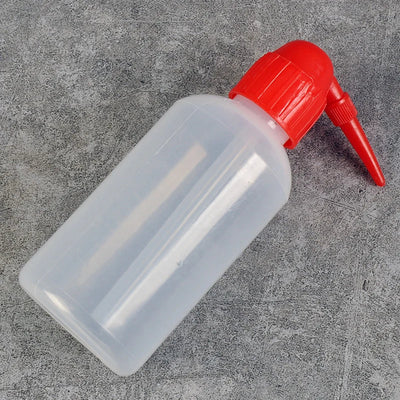
Airbrush Cleaning Bottle from €15,95
Why it helps: A squeeze bottle for flushing the airbrush between colors and refilling cups.
How to use it
Flush the cup between colors so old paint does not build up.


Reviewed November 3, 2026