
Masking tape pulling paint off the model
Paint that comes away with the masking tape. Usually grease on the plastic, tape that grips harder than the paint, or paint that has not cured.
Quick answer
Paint lifts with tape when the tape sticks to the paint more strongly than the paint sticks to the model. Clean the plastic, use a primer, let paint cure before masking, use a low-tack tape (or reduce the tack of normal tape), and peel it back slowly and low over itself. To repair, feather the edge with fine sanding, spot-prime and repaint.
- TimePrevention: no extra time. Repair: 20-40 minutes plus drying.
- DifficultyBeginner
Safety first
- Ventilate when spraying primer and use a respirator suited to the product.
Is this your problem?
- Paint and primer both lift to bare plasticAdhesion to the plastic failed: grease, mold release or no primer.
- Only the top color lifts, primer staysThe top coat had not cured, or does not bond well to a very smooth or glossy layer below.
- Paint lifts only along the tape edge in a ragged linePaint bridged the tape edge and tore when pulled: remove tape sooner or score the edge.
- Metallic or lacquer layers liftSome metallic and buffing finishes are fragile; use the lowest-tack tape or mask with liquid mask.
You'll see
When you remove masking tape, a patch or strip of paint, sometimes down to bare plastic, comes away stuck to the tape.
Likely causes
- Grease, skin oils or mold release on the plasticPaint sits on the contamination rather than gripping the plastic, so anything sticky pulls it off.
- No primer, or primer not curedPrimer is designed to bond to plastic and give paint something to grip; skipped or soft primer is a weak layer.
- Tape too stickyGeneral-purpose tapes have a stronger adhesive than delicate hobby paint can resist.
- Paint not curedPaint can be dry to the touch long before it is hard; soft paint stays attached to the tape adhesive.
- Pulling the tape straight upPulling at 90 degrees concentrates force on the paint at the edge.
What you need
- Warm water and mild dish soap
- Primer
- Low-tack masking tape
- Fine sanding sponge for repair
How to fix it
- Wash parts in warm soapy water, rinse and let them dry before priming. Handle them by the edges or with gloves afterwards.
- Prime and let the primer cure as its maker instructs.
- Let color coats cure before masking; acrylics are often touch-dry quickly but harder after a day.
- Use low-tack hobby tape. If you only have stronger tape, stick it to a clean cutting mat or your skin once to reduce the tack.
- Press the tape edges down firmly but do not burnish the whole tape surface hard over fragile paint.
- Remove the tape slowly, folding it back over itself at a low angle, pulling away from the painted edge.
What to avoid
- Pulling the tape straight up.
- Masking over paint that is still soft.
- Using household tape on models.
Common wrong fixes
- Painting thicker coats so the paint is stronger: thick coats cure slower and lift more.
- Using a hair dryer to speed up curing on plastic: it can warp parts.
Not worth fixing, or time to ask us
If the primer itself comes off with the tape, the surface was not clean: strip and restart that part. Ask us if paint lifts even with low-tack tape on a primed, cured surface.
By situation or hobby
Acrylic paint
Most likely to lift if masked too soon or sprayed on unprimed plastic. Give it a longer cure before masking.
Lacquer paint
Bites into plastic and primer and usually resists tape well once dry.
Metallics and buffable finishes
Fragile: use the lowest-tack tape, liquid mask, or seal them first with a clear coat if the finish allows.
Resin and 3D prints
Wash off mold release or resin residue first; resin needs a well-bonding primer.
Already ruined?
Let the surrounding paint cure. Feather the edge of the lifted patch with a fine sanding sponge so no step remains, wipe off the dust, spot-prime bare plastic, then repaint the area in thin coats. If primer lifted too, the surface was not clean: strip that part and restart.
Next time
- Wash parts before priming.
- Always prime.
- Wait for cure, not just touch-dry.
- Use low-tack tape or de-tack tape.
- Peel low and slow.
Frequently asked questions
Why does paint peel off with masking tape?
The tape sticks to the paint harder than the paint sticks to the model, usually because of grease, no primer, uncured paint or strong tape.
How long should paint dry before masking?
Follow the paint maker. Many hobby acrylics are safe to mask after about a day; lacquers are usually safe sooner.
How do I make masking tape less sticky?
Stick it to a clean cutting mat or the back of your hand once before applying. Test on a spare part.
Do I need primer to stop paint lifting?
Primer greatly reduces lifting because it bonds to plastic and gives the paint something to grip.
Can I fix paint that came off with tape?
Yes: feather the edges with fine sanding, spot-prime and repaint in thin coats.
Jargon explained
- Low-tack tape
- Tape with a weaker adhesive made for delicate surfaces.
- Feathering
- Sanding the edge of a paint chip until it blends smoothly into the surrounding paint.
Tools that can help
-
2~12mm Low Tack Flexible Masking Tape from $15.99
Why it helps: Described as low tack, so it removes easily without damaging the part, and flexible enough for curves.
How to use it
Use it on painted or primed surfaces and remove it slowly.
-
Guazi Studio 100ml Model Primer Surfacer $23.95
Why it helps: A primer surfacer described as gripping plastic, resin and metal and giving the color something to bite into.
How to use it
Prime clean parts and let it cure before painting and masking.
-
Stedi 10pcs/box #400~15000 3mm Sanding Sponges from $10.95
Why it helps: Flexible sponges in many grits, good for feathering the edge of a lifted patch.
How to use it
Feather the edge with a fine grit before spot-priming.
-
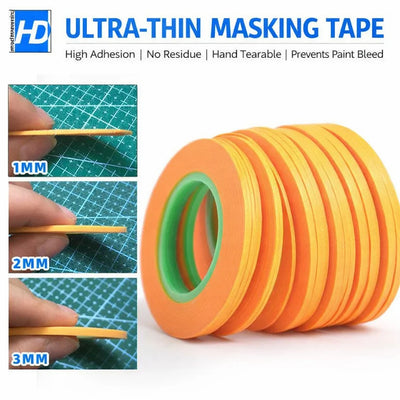
Hobby Design Ultra-Thin Modeling Masking Tape $11.95
Why it helps: Described as high adhesion with no residue and a tight seal against bleed.
How to use it
Use it where you need crisp edges on a surface you know is clean and well cured.


Reviewed November 3, 2026