
Acrylic paint not covering: white, yellow and red
Paint stays streaky or see-through after several coats. Some colors are naturally translucent, and the base color and thin layers matter.
Quick answer
Bright colors such as yellow, red, orange and some whites use pigments that cover poorly, so they look streaky over a dark primer or underlying color. Undercoat with white or a light neutral (and a darker red or pink under reds), apply several thin layers and let each dry, and mix the paint thoroughly before use. A single thick coat looks worse, not better, because it dries with brush marks and ridges.
- TimeRescue: 1-2 hours including drying between coats
- DifficultyBeginner
Safety first
- Ventilate when spraying and wear a respirator suited to the paint.
- Wear a dust mask if you sand between coats.
Is this your problem?
- Bright yellow, red, orange or white looks streaky over gray or blackPoor-coverage pigment over a dark base: this page.
- Paint looks watery and runs off the brushIt is too thin, or the paint is under-mixed. Mix well and thin less.
- Paint is clumpy and will not flowSee Dried or separated paint in the pot.
- Paint dries too fast on the brush and dragsSee Acrylic paint drying too fast.
- Paint rubs off after dryingSee Paint rubbing off or not sticking.
You'll see
The paint looks patchy or striped, the primer or earlier color shows through, and each new coat seems to move paint around instead of building color.
Likely causes
- Translucent pigmentsYellow, red, orange and many whites are naturally less opaque than darker colors.
- A dark baseBright colors over black or dark gray primer need many more coats.
- Under-mixed paintPigment settles; the liquid on top has little color.
- Thick coatsThey dry with brush marks and uneven thickness, and do not cover better than thin ones.
- Overthinned paintToo much water or thinner leaves too little pigment on each pass.
What you need
- The paint, well mixed
- White or light gray primer or undercoat (and a darker red/pink for reds, if you wish)
- A good brush or airbrush
- A palette that keeps paint workable
- Fine sanding stick for ridges
How to fix it
- Mix the paint thoroughly. Shake bottles for as long as the maker advises, or use an agitator ball or shaker, and check that nothing is left at the bottom.
- Look at the base color. For yellow, orange and most bright colors, repaint the area in white or a very light neutral first.
- For reds, many painters start with a darker red or pink undercoat; follow what suits your paint.
- Apply a thin coat and let it dry fully. Do not try to cover everything in one go.
- Build with further thin coats (often two to four, or more for the weakest pigments) until the color is even.
- If brush marks or ridges build up, lightly smooth them with a very fine abrasive before the final coat.
- For airbrush work, use light passes that let each coat flash before the next.
What to avoid
- One thick coat to hide the base.
- Bright colors straight over black primer.
- Overbrushing, which lifts the layer beneath.
- Adding lots of water in an attempt to make paint flow.
Common wrong fixes
- Going back over a half-dry coat repeatedly.
- Adding more thinner when the issue is a dark base.
- Pressing harder with the brush.
Not worth fixing, or time to ask us
Ask us which undercoat suits the color scheme you are planning before you start painting.
By situation or hobby
Brush-painted miniatures
Thin with water or the maker's medium to the consistency of milk, apply smooth thin layers and let them dry between coats.
Airbrushed model parts
Prime in white or a light shade first. Build color in light passes rather than a single wet pass.
Gunpla and armor panels
A light-colored primer under yellows, reds and whites cuts the number of coats needed.
Whites
White often needs several thin coats over a light primer. Some painters add a very small amount of a light gray or cream for subtle shading.
Already ruined?
Streaky paint is rarely ruined: more thin coats or a better undercoat usually fixes it. If ridges and brush marks have built up, let the paint cure, smooth them with a very fine abrasive and recoat. Paint so thick that it has hidden detail is the exception; strip it and start again.
Next time
- Mix paint thoroughly each session.
- Use light primer under bright colors.
- Plan for several thin coats from the start.
- Keep your paint workable so you can lay smooth layers.
- Choose opaque or highly pigmented lines for hard colors if you can.
Frequently asked questions
Why does yellow paint never cover?
Yellow pigments are naturally translucent. Paint it over a white or light base and build it with several thin coats.
How many coats of paint should I apply?
Enough thin coats to get an even color. Two to four is common, but weak pigments over dark bases may need more.
Why is my white paint streaky?
White may be under-mixed or over-thinned, or used over a darker color. Mix it thoroughly, undercoat it with light primer and apply thin coats.
Should I use black primer under red?
Many painters prefer a lighter or darker red/pink undercoat instead; black makes red harder to build.
Is thicker paint better for coverage?
No. Thick paint dries with ridges and brush marks; thin layers cover more evenly.
Jargon explained
- Opacity
- How well a paint hides what is underneath.
- Undercoat
- A base layer in a chosen color that helps the final color look right.
- Flash
- The short period when a sprayed coat loses its wet gloss before the next pass.
Tools that can help
-
Advanced Cordless Paint Shaker €123,95
Why it helps: A cordless electric shaker for bottles from 5 to 100 ml, described as mixing paints that have settled.
How to use it
Mix every bottle before use so the pigment is evenly spread.
-
MAZHA T0016 Stay-Wet Palette for Miniatures from €23,95
Why it helps: A stay-wet palette that keeps acrylic paints workable while you thin, blend and layer them.
How to use it
Keep thinned paint on the palette so you can lay thin coats without it drying.
-
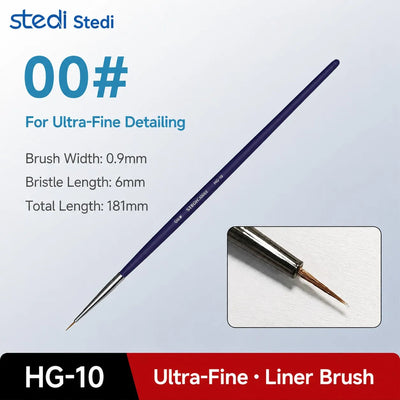
Stedi Sable-Hair Fine Detail Brushes for Miniatures & Scale Models from €23,95
Why it helps: Sable detail brushes sold in graded sizes, described as holding a point and carrying enough paint to finish a line.
How to use it
Use them to lay smooth, thin coats on small areas.


Reviewed November 3, 2026