
Panel line wash stains and tide marks
Dark blotches and tide marks instead of neat panel lines. Seal the paint with gloss or satin first, use a wash that will not attack the paint, and let it flow by itself.
Quick answer
A wash stains when it soaks into matt or unsealed paint, or when the wash's solvent attacks the paint under it. Seal the model with a cured gloss or satin coat first, touch the wash only into the panel line so it flows along by capillary action, and clean the excess with a barely damp swab moved across the line or in the direction of airflow. Use a wash type that is safe over your paint, and test first.
- Time30-60 minutes for a vehicle-size model, plus 24 hours or more for gloss to cure
- DifficultyBeginner to intermediate
Safety first
- Ventilate when using enamel/oil washes and their thinners; keep them away from flames.
- Dispose of solvent-soaked swabs and paper safely.
Is this your problem?
- Gray haze or tide marks that will not wipe offThe wash soaked into matt or porous paint: seal before washing next time.
- The base paint softened, smeared or came offThe wash solvent attacked the paint: check compatibility.
- Wash pulled out of the lines when cleaningWiping along the line drags it out: wipe across the line.
- Wash beads up and will not flowThe gloss is too smooth for an acrylic wash, or the wash needs a drop of its own thinner or flow aid.
- Uneven shine after washingSee Patchy or uneven sheen.
You'll see
Dark blotches, rings, tide marks or a dirty haze around panel lines, rivets or recesses instead of a crisp dark line. Sometimes the base paint softens, wipes off or looks glossy and patchy where the wash went.
Likely causes
- Washing over matt or unsealed paintMatt paint is porous; pigment from the wash gets trapped in its texture and stains it.
- Wash solvent attacking the paintEnamel and oil washes are thinned with mineral-spirit-type solvents; over uncured or incompatible paint (especially enamels), they can soften or lift it.
- Too much wash on the surfaceA flooded surface leaves pigment everywhere as the solvent evaporates, forming tide marks at the edges.
- Clear coat not curedA soft clear coat does not protect the paint and can itself be softened by the wash.
What you need
- Gloss or satin varnish
- Panel line wash (enamel, oil or water-based)
- Fine brush or panel line applicator
- Cotton swabs or a lint-free cleaning stick
- Matching thinner for the wash
How to fix it
- Seal the paint with a gloss or satin clear coat and let it cure fully (many modellers wait 24-48 hours).
- Test the wash on a hidden area or spare part.
- Touch a fine brush or applicator loaded with wash into the panel line and let capillary action carry it along.
- Let it flash off for a few minutes (until the shine goes on enamels and oils; check the maker).
- Clean the excess with a swab or stick barely dampened with the wash thinner, moving across the line or in the direction air would flow over the real vehicle.
- Seal the result with a clear coat in your final sheen once dry.
What to avoid
- Flooding the surface with wash.
- Washing on bare or matt paint.
- Enamel washes on stressed Gunpla plastic.
- Wiping along the line, which pulls the wash out.
Common wrong fixes
- Scrubbing with lacquer thinner or acetone: it removes paint along with the stain.
- Adding more wash to even out a stain: it makes it darker.
Not worth fixing, or time to ask us
On a model that will be heavily weathered, a small stain can be absorbed into the weathering. Ask us if you are not sure which wash suits your paint.
By situation or hobby
Acrylic base paint
Enamel or oil washes are the usual choice over sealed acrylics; many modellers report good results once the acrylic and gloss are fully cured.
Enamel base paint
Do not put an enamel or oil wash directly on enamel paint; seal with an acrylic gloss first or use a water-based wash.
Lacquer base paint
Lacquer is tough once cured; most wash types are safe over a gloss coat.
Unpainted Gunpla
Enamel thinner can make stressed plastic (joints, tight-fitting parts) crack. Use a panel-line pen or water-based wash, or apply enamel washes on unassembled, unstressed parts and very sparingly.
Minis with shade washes
All-over shade washes are designed for matt surfaces; to avoid tide marks, thin the wash slightly, avoid pooling on flat areas and lift excess with a dry brush.
Already ruined?
Fresh stains: wipe with a swab dampened in the wash's thinner while it is wet. Dried stains on a gloss coat: dampen a swab with the wash thinner and rub gently, testing first. Stains soaked into matt paint: seal the area with gloss, then lightly re-paint or blend with the base color, or use the staining as part of weathering.
Next time
- Always seal before washing.
- Let the gloss cure.
- Check wash vs paint compatibility.
- Apply wash only into the lines.
- Wipe across the line.
Frequently asked questions
Can you put an enamel wash over acrylic paint?
Yes, generally, once the acrylic is fully cured and ideally sealed with gloss. Test first.
Can you put a wash over matt paint?
You can, but it tends to stain. Seal with gloss or satin first for clean panel lines.
How do I clean up a panel line wash?
Wipe with a swab barely damp with the wash thinner, moving across the line or in the airflow direction.
Enamel wash vs oil wash: which is better?
Both work over sealed acrylic or lacquer. Oils dry slower and give more working time; enamels dry faster. Water-based washes are safest on bare or stressed plastic.
Why does my wash leave tide marks?
Too much wash on a flat area or on matt paint; pigment collects at the edges as it dries.
Does panel line wash crack Gunpla?
Enamel thinner can crack stressed ABS or tight-fit parts. Use pens or water-based washes on assembled kits.
Jargon explained
- Pin wash
- A wash applied only into panel lines and around details, not all over.
- Flash off
- The short time for a wash's solvent to evaporate before cleaning.
- Capillary action
- The way liquid is drawn along a narrow groove by itself.
Tools that can help
-
NightWorks Acrylic Varnish and Hard Coat from €23,95
Why it helps: A varnish coat that locks down decals, evens out sheen and protects the paint.
How to use it
Apply before the wash, and again afterwards to seal.
-
UStar Panel Line Applicator €17,95
Why it helps: A fine-needle tip that draws panel-line fluid into recessed detail.
How to use it
Run it along the panel line and let the fluid flow.
-
RAY Studio Panel Line Cleaning Stick from €14,95
Why it helps: A firm polyester tip that lifts enamel and acrylic seepage cleanly without the fluff a cotton bud leaves.
How to use it
Wipe excess across the line after the wash flashes off.
-
Stedi Acrylic Panel Liner from €29,95
Why it helps: A water-based panel lining wash, made to flow into recesses without harsh solvents.
How to use it
Use it on bare plastic or Gunpla where solvent washes are risky.
-
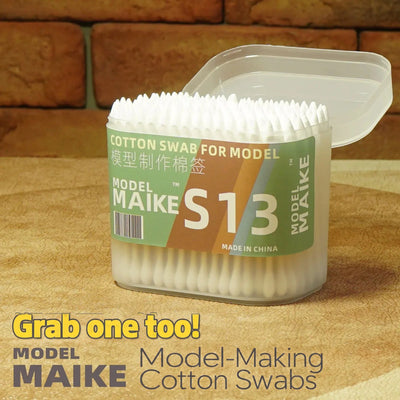
MAIKE 200pcs Double Round Tip Cotton Swabs from €15,95
Why it helps: Firm round tips that hold their shape when lifting excess enamel from panels.
How to use it
Clean larger areas of excess wash.


Reviewed November 3, 2026