
How to polish a model car: orange peel and dust in gloss
Gloss paint on model cars shows every flaw. Level it, then polish through finer stages.
Quick answer
Let the clear coat cure fully, then wet-sand lightly with very fine paper to level orange peel or dust nibs, and polish through progressively finer compounds until the shine returns. Avoid pressing on edges and sharp corners, where paint is thin. Work slowly, check often, and stop if you see color or primer through the clear. Follow the paint maker's instructions for cure times.
- TimeRescue: 1-3 hours plus cure time. Prevention: clean booth and thin coats.
- DifficultyAdvanced
Safety first
- Wear a dust mask when sanding.
- Wet sanding reduces dust.
- Keep rotary tools at low speed and secure the part to avoid slipping.
Is this your problem?
- The surface is textured like orange peelLevel and polish: this page. For the spray cause, see Grainy or orange-peel airbrush finish.
- Small specks or dust are trapped in the clearLevel and polish; for prevention see Dust in the paint or varnish.
- The clear has cracks or wrinklesSee Clear coat cracking or paint wrinkling.
- The shine is uneven or patchy after polishingSee Patchy or uneven sheen.
- Sanding scratches remain after polishingSee Sanding scratches showing through paint.
You'll see
The gloss looks like an orange peel, small specks are trapped under the clear, or the surface looks dull or hazy. Compared to a real car, the finish may look pitted instead of smooth.
Likely causes
- Paint too thick or sprayed from too farDroplets start to dry before they flow together, leaving a textured surface.
- Dust and debrisParticles land in wet clear and are trapped when it dries.
- Clear coat not fully curedPolishing soft paint smears it and loses gloss.
- Skipped polishing stagesJumping to a fine compound leaves coarser marks behind.
- Pressing on edgesEdges and sharp lines have thin paint and wear through first.
What you need
- Very fine wet-and-dry paper or sanding sponges (fine grits)
- Polishing compounds from coarse to fine
- Polishing sponges or cloths
- Masking tape to protect edges
- Water and a spray bottle
- Soft cloth and mild dish soap
How to fix it
- Let the clear coat cure for the time the paint maker recommends; thicker or lacquer coats may need longer.
- Tape off edges and sharp lines to protect them.
- Soak a very fine sanding sponge or paper in water. Sand lightly just to flatten the peaks of the orange peel or knock off dust nibs, using only light pressure.
- Wipe clean and check in raking light. The surface should be evenly dull. Stop when the peaks are gone; do not sand the valleys.
- Polish with a coarser compound on a sponge or cloth, using small circles and light pressure.
- Wipe clean and move to a finer compound. Repeat through finer stages until the shine returns.
- Buff with a soft cloth. Wash off residue with mild soapy water.
What to avoid
- Polishing wet or soft paint.
- Pressing hard on edges.
- Skipping steps in the polishing sequence.
Common wrong fixes
- Using toothpaste or household abrasives, which are unpredictable.
- Sanding aggressively to remove all peel at once.
Not worth fixing, or time to ask us
If you are polishing a competition-level or one-off model, or are unsure whether your clear is cured, ask us first. A test panel is also a good idea.
By situation or hobby
Lacquer clear
Lacquers polish well once fully cured; follow the maker's cure time.
Enamel or acrylic clear
Allow ample cure time; soft paint smears when polished.
Gunpla gloss
Plastic parts can overheat if you polish aggressively with power tools. Use hand pressure.
Rotary tool polishing
Use low speed and keep the tool moving to avoid burning through paint.
Already ruined?
Slight orange peel and a few dust nibs can usually be polished out. If sanding or polishing has gone through to color or primer, that panel needs to be resprayed and re-cleared. Deep texture or heavy runs may require more aggressive sanding, which risks burn-through.
Next time
- Spray thin, wet coats of clear at the right distance and thinning.
- Work in a clean area with filtered air.
- Let paint cure fully before polishing.
- Wet-sand only the minimum needed.
- Tape edges before polishing.
Frequently asked questions
How do I polish a model car?
Let the clear coat cure, wet-sand lightly to level it, then polish from a coarser to a finer compound and buff with a soft cloth.
How do I get rid of orange peel on a model car?
Wet-sand just enough to flatten the peaks, then polish through stages. Prevent it next time with thinner paint and better spraying.
What compound should I use on model car paint?
Hobby polishing compounds in graded stages from coarse to fine; follow the maker's order.
How long should clear coat cure before polishing?
It depends on the paint. Follow the maker's instructions; lacquers often need longer.
Can I polish enamel paint?
Yes, after it is fully hard. Enamel can take a long time to cure.
Jargon explained
- Orange peel
- A dimpled texture in a gloss surface.
- Burn-through
- Polishing or sanding through the paint layer to the color or primer beneath.
- Nib
- A speck of dust or debris trapped in paint.
Tools that can help
-
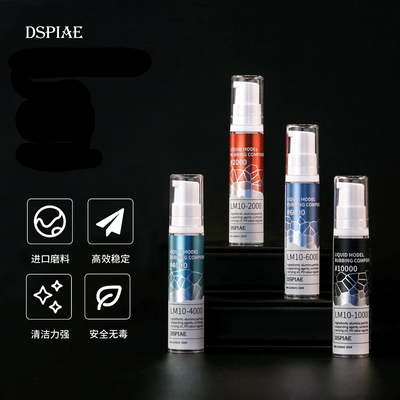
DSPIAE Liquid Polishing Compound from $18.95
Why it helps: Liquid polishing compounds in grits from #2000 to #10,000.
How to use it
Polish from the coarser to the finer compound, wiping clean between stages.
-
DSPIAE Polishing Sponges from $14.95
Why it helps: Flexible pads described as removing sanding marks and haze; they mount on a rotary tool.
How to use it
Refine the surface before applying compound; use low speed.
-
RAY Studio Ultra-Soft Polishing Cloth Set $16.95
Why it helps: Ultra-soft cloths in three finer grits (3000, 6000, 12000) for buffing away haze.
How to use it
Use for the final buff and to clear dust.


Reviewed November 3, 2026