
How to straighten warped plastic and resin parts
Barrels that curve, hulls that rock, thin resin parts that arrive bent. Many can be straightened with hot water and patience.
Quick answer
Bent cast-resin and many thin plastic parts can be softened in hot water, gently straightened by hand, and then held straight while they cool, often under cold water. Start with water that is hot but not boiling, work in short dips, and never force a part that is not yielding. Check how the material reacts on a spare sprue first. Bent 3D-printed resin parts are different: they can crack, so be more cautious.
- TimeRescue: 15-30 minutes per part plus cooling. Prevention: store flat and supported.
- DifficultyIntermediate
Safety first
- Hot water scalds. Use tongs or reverse tweezers and handle bowls carefully.
- Do not use a microwave or open flame to warm parts.
- Wear heat-resistant gloves if working with very hot water; check the product details for what they cover.
- Resin dust is irritating; wear a mask when sanding.
Is this your problem?
- A cast-resin or thin plastic part is bowed or curvedWarping: this page.
- A 3D-printed resin part has curled or snapped when bentSee Resin print cracking or brittle.
- The part is straight but the joint will not closeCheck for flash or a seam gap before heating. See Seams that keep coming back.
- The part is soft, tacky or flexes like rubberSee Sticky resin print; heat will not fix an uncured part.
- The part is thick and rigid and will not move in hot waterIt may be too thick or a different material; do not force it.
You'll see
A long thin part such as a gun barrel, mast or fuselage half curves along its length, or a flat piece rocks on the table. Resin kit parts sometimes arrive bent after storage or transport, and thin styrene can bow if it was stored under tension.
Likely causes
- Storage and shipping pressureThin parts stored bent, pressed against a wall or under other parts take on the shape over time.
- Uneven cooling in castingResin parts can shrink slightly unevenly as they cure, leaving long parts with a slight curve.
- HeatParts left in a hot car or near a heater soften and set bent.
- Thin geometryLong thin sections have little stiffness, so they bow easily.
- Uncured or under-cured materialSoft material stays flexible and deforms under its own weight.
What you need
- Kettle or pot of hot water and a heat-safe bowl
- Cold water bowl (ice optional)
- Reverse tweezers or tongs to dip parts
- Heat-resistant gloves
- Flat surface or straight edge to check against
- Clamp or jig to hold the part in shape
How to fix it
- Check the part against a straight edge to see how bent it is. Test material on a spare sprue or a hidden part first.
- Heat water until hot but not boiling. Many resins soften at a lower temperature than you would expect.
- Using tongs or reverse tweezers, dip the part for a few seconds. Lift it out and test its flexibility; repeat in short dips until it bends easily.
- Straighten it gently with your fingers or against a flat surface, aiming to slightly over-correct as it will relax slightly.
- Immediately hold it in the straightened shape under cold or iced water until it sets, a minute or so.
- Lay it on a flat surface or clamp it straight and leave it for some time to set properly.
- Check against the straight edge. Repeat if it springs back, but stop if the surface softens or distorts.
What to avoid
- Using boiling water directly on thin parts without testing.
- Forcing a part that is not yielding.
- Straightening and walking away without holding the shape until cool.
Common wrong fixes
- Using a hair dryer or heat gun, which heats unevenly and can distort the detail.
- Microwaving parts, which is unsafe and can ruin the part.
Not worth fixing, or time to ask us
If the part is rare, expensive or has fine detail near the bend, ask us before heating it. We can help you judge the material and risk.
By situation or hobby
Cast resin kit parts
Usually respond well to hot-water straightening. Add to the dip time in small steps rather than boiling.
Thin styrene
Some styrene parts will bend with hot water, but it can warp or lose detail if overheated. Test on a spare.
3D-printed resin
Many printed resins are brittle and can snap when bent; use lower heat and very gentle pressure, or reprint.
Long barrels and masts
Use a straight jig, for example a steel ruler or a groove, to hold the part as it cools.
Already ruined?
Most mild bends can be removed. Severe bends, parts with sharp kinks, or brittle prints may crack or never fully straighten. In that case, consider replacing the part, or cut and pin it with a brass rod. A part that springs back straight after a few cycles has taken the shape; one that creeps back to bent may need a clamp-and-wait approach.
Next time
- Store long thin parts flat and supported.
- Keep parts out of hot cars and away from heaters.
- Cure printed parts as the resin maker recommends.
- Store sprues and kits flat, not stacked unevenly.
Frequently asked questions
How do I straighten warped resin parts?
Dip in hot water until the part softens, straighten gently, then hold it straight in cold water until it sets.
How hot should the water be?
Hot but not boiling is a safe starting point. Different resins soften at different temperatures, so test on a spare part.
Can I straighten warped plastic model parts the same way?
Sometimes. Thin styrene may soften in hot water, but it can lose detail if overheated. Test first.
Will the part stay straight?
Usually, if you hold it straight until it cools. Strong bends can creep back, so repeat or support it.
Can I fix a bent 3D-printed resin part?
Sometimes with gentle heat, but many printed resins crack. Be careful and accept that reprinting may be easier.
Jargon explained
- Warping
- A change in shape from a flat or straight form to a curve.
- Over-correct
- Bend slightly past straight so the part settles at straight.
Tools that can help
-
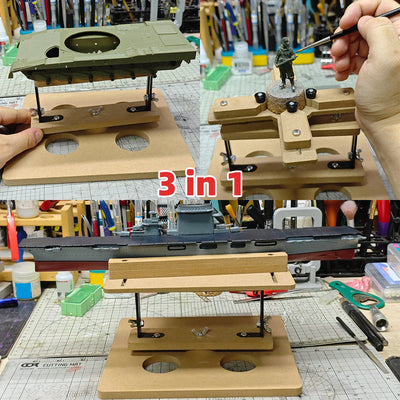
Cormake Universal Model Building Clamp Kit 7,900 kr
Why it helps: A clamp kit with adjustable clamps and arms on a stable base, described as gripping awkward shapes from any angle.
How to use it
Hold the part straight while it cools or the glue sets.
-
Reverse Tweezers With Or Without Weighted Base from 2,900 kr
Why it helps: Self-closing tweezers that grip the instant you let go, keeping your hands free.
How to use it
Dip small parts in hot water without holding them in your fingers.
-
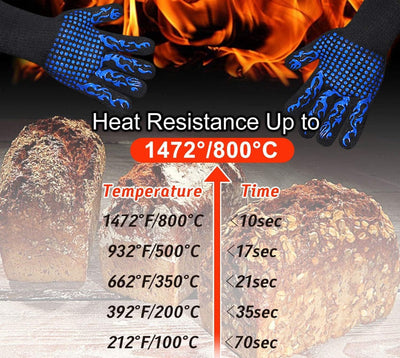
High Temperature Resistance Gloves 4,500 kr
Why it helps: Gloves layered for tasks involving high temperatures; check the product details for what they cover.
How to use it
Protect your hands when handling hot containers or parts.

Reviewed November 3, 2026